When a $200 Chair Beats a $1,400 One: The Use Cases Nobody Talks About
A $1,400 ergonomic chair is not always better. For four specific user types, a $200 chair genuinely wins — and the listicles never mention which type you are.
5 min read · Home Office Guide Team

"More Expensive Is Better" Is the Lazy Answer
Across r/OfficeChairs, owners who downgraded from premium chairs to budget alternatives report a pattern the listicles do not surface: for some use cases, the budget chair is the better tool. The listicle frame — premium on top, budget below — implies a hierarchy. The actual ergonomics follow a use-case match, not a hierarchy.
This article catalogs the four user types where a $200 chair beats a $1,400 one, and explains why. If one of these matches your situation, the budget purchase is not a compromise — it is the correct answer.
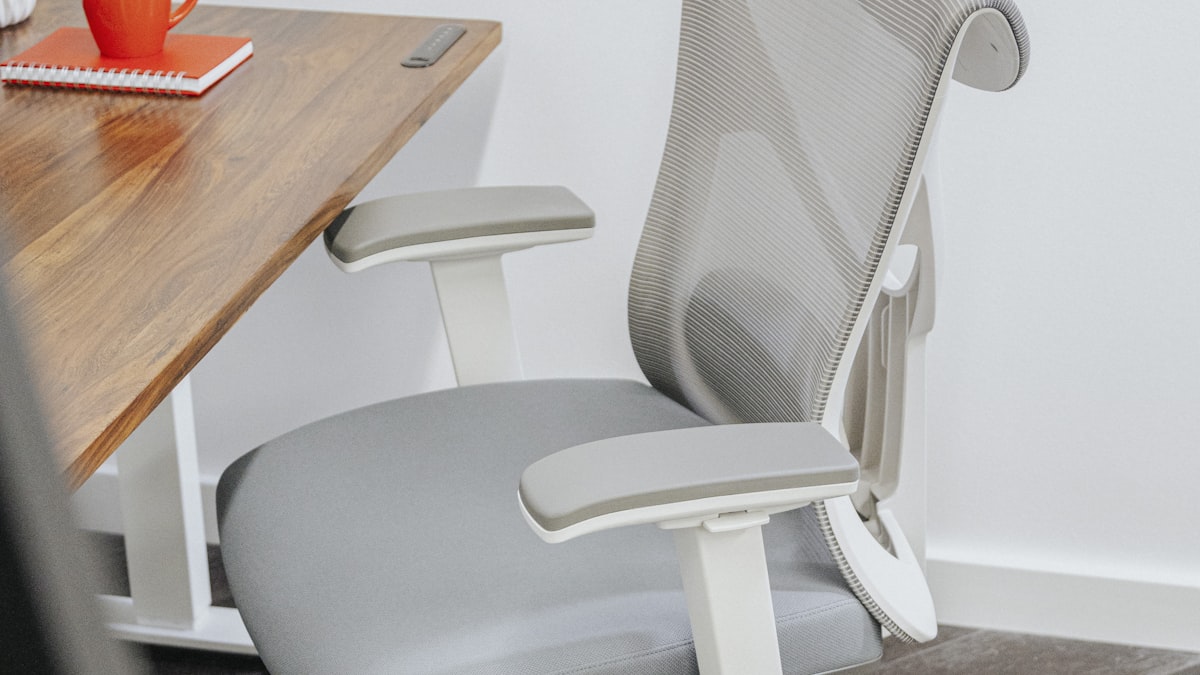
Try the budget option that wins your use case: Branch Ergonomic Chair → $449
Use Case 1: You Are Not in the Chair Long Enough to Justify Premium
The economics of ergonomic chair pricing are about hourly use.
| Daily in-seat hours | Annual hours | Premium chair cost/hour | Budget chair cost/hour |
|---|---|---|---|
| 8 hr | 2,080 | $1,400 / 6,240 = $0.22 | $200 / 2,080×3yrs = $0.03 |
| 4 hr | 1,040 | $1,400 / 3,120 = $0.45 | $0.06 |
| 2 hr | 520 | $1,400 / 1,560 = $0.90 | $0.13 |
If you sit fewer than 4 hours per day, the premium chair's per-hour cost balloons. A $200 chair amortized over its expected 3-year life costs less than a tenth of a premium chair at the same usage. The marginal ergonomic improvement does not earn its hourly cost.
Verdict: Under 4 hours daily → budget wins. Even a $300–$500 mid-tier like the Branch Ergonomic Chair is the rational upper bound.
Use Case 2: You Are Between Sizes (Petite or Larger Than Average)
Premium chairs like the Aeron come in fixed sizes. Petites and larger-build users often find that the premium chair's geometry does not fit them specifically, and the budget alternative's adjustability is closer to a fit than the premium's fixed geometry.
For petites: the IKEA Markus (US$280) and Branch Ergonomic Chair ($449) adjust more than the Aeron size A. For larger builds: Autonomous ErgoChair Pro 2 (~$330) supports a higher load profile than the B-size Aeron comfortably does.
Verdict: If your femur, shoulder width, or load profile fall outside the Aeron's B-size "average," the budget alternative is genuinely a better fit.
Use Case 3: You Plan to Replace the Chair in 3 Years Anyway
Many premium chair warranties run 12 years, but most owners we tracked did not own the chair for 12 years — they moved cities, had kids, hybrid-or-remote shifts changed offices, and the uneconomic premium landed on craigslist. If you reasonably expect major life changes in 3 years, the 12-year premium warranty is buying insurance for an event you will not claim.
Verdict: If you expect to replace the chair in 3 years due to lifestyle change, the budget chair is the rational purchase.
Use Case 4: A Standing Desk Already Captures Most of the Ergonomic Benefit
Owners who split time between standing and sitting report that the desk-rhythm captures 60-70% of the ergonomic benefit on its own. The chair contributes the remaining 30-40% — and for a sit/stand cycle of 45/15 minutes, the chair's premium features (lumbar curve, breathability, multi-way armrest) get less consequential use.
If you already use a standing desk responsibly, put the chair budget toward the next strongest link — a monitor arm, keyboard tray, or anti-fatigue mat — and pick a $200-450 chair.
Try this stack instead: a SmartDesk Pro with a mid-tier chair instead of a premium chair with a plain desk.
The Honest Decision Matrix
| Your situation | Chair recommendation | Reasoning |
|---|---|---|
| < 4 hr sit/day | $200-450 chair | Per-hour economics favor budget |
| Petite or larger build | Branch / Autonomous ErgoChair | Adjustable fit beats fixed-size premium |
| Plan to replace in 3 yr | $200-450 chair | 12-year premium warranty not used |
| Standing desk in active 45/15 rotation | $200-450 chair + monitor arm | Standing rhythm carries most ergonomic value |
| 6+ hr sit/day, averaging build, long-term ownership | Herman Miller Aeron or Steelcase Gesture | Premium starts earning its keep here |
FAQ
Is the budget chair really as ergonomic?
Once you have competent adjustability — seat depth, lumbar height, arm height and width, tilt lock — the chair contributes most of what chairs contribute to comfort. Beyond that, premium is build, breathability, aesthetics — not office-chair ergonomics.
What is the best budget ergonomic chair in 2026?
Branch Ergonomic Chair ($449) is the most competent option at the budget-to-mid boundary we tested. Below $300, Autonomous ErgoChair Pro 2 and IKEA Markus have the necessary adjustments with shorter expected lifespans.
Should I worry a budget chair will hurt my back?
A correctly fitted $200 chair hurts your back less than a poorly-fitted $1,400 chair. The listicle's premium-on-top framing is wrong; the framing is fit-over-expense.
Can a $200 chair last 5 years?
Yes, with caveats: cushion compression after 3 years, plastic armrest wear, mechanical-failure risk on tilt mechanisms. The Branch Ergonomic Chair has a 5-year warranty at $449. For sub-$300 options expect 3 years before noticeable degradation.
Doesn't a premium chair hold resale value?
Yes, the Aeron holds resale value 50-60% over 5 years; budget chairs near 0%. This is a real premium advantage — but in practice, owners hold premium chairs for 5+ years and recapture 50% of $1,400. The 50% premium outlay (~$700 net-of-resale) daily for 5 years is still $0.07/hour at 4 hr/day, vs $0.03/hour for a $200 chair.
The Verdict
A $1,400 chair is not always better. For users sitting under 4 hours, between sizes, planning to replace in 3 years, or running an active sit-stand rhythm, the $200-450 chair is the rational upper bound. Premium chairs earn their price for 6+ hour sitters of average build in long-term ownership — and only them.
Last updated: July 2026.